
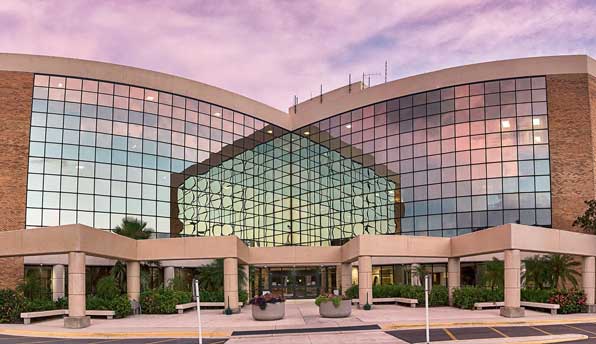

Charlotte County became an Urban County Entitlement Community as of October 1, 2025, and will begin directly administering federal Community Planning and Development (CPD) funding from the U.S. Department of Housing and Urban Development (HUD). CPD programs provide flexible resources to support locally driven efforts that strengthen neighborhoods, improve housing stability, expand economic opportunities, and enhance infrastructure and public services, with a focus on serving low- and moderate-income residents.
The purpose of this program is to develop viable urban communities by providing decent housing, a suitable living environment, and expanding economic opportunities for low- and moderate-income persons.
- Infrastructure: Stormwater systems, roads, sidewalks, water and sewer line extensions, and other capital improvements to support resilient, accessible, and livable communities.
- Public Services: Programs that address local needs, including homelessness prevention, senior and youth services, food insecurity, transportation access, and mental and behavioral health services.
- Affordable Housing: Preservation and development of housing that is safe, decent, and affordable for low- and moderate-income households through rehabilitation, accessibility upgrades, and housing support services.
The City of Punta Gorda, the sole incorporated municipality in the County, will participate as a cooperating unit of general local government (UGLG) under Charlotte County’s CPD programs. Together, the County and City will work to ensure that CPD funds are allocated equitably and strategically to meet community goals.
Urban Qualifications
Urban county qualification is a designation granted by HUD that allows counties meeting certain population and governance criteria to directly receive and administer CPD formula funding on behalf of themselves and participating local governments. Through this designation, Charlotte County will coordinate with the City of Punta Gorda and other eligible entities to plan and implement projects that address affordable housing, infrastructure, public services and community development priorities.
Charlotte County will compile and manage all Community Planning and Development (CPD) projects under its Urban County designation. This includes initiatives related to affordable housing, infrastructure improvements, public service enhancements, and other community development priorities. A comprehensive list of projects is provided below to ensure clear and transparent communication with the citizens, fostering accountability and keeping the community informed about ongoing and upcoming initiatives that directly impact their neighborhoods and quality of life.
2026-2030 Consolidated Plan and 2026 Action Plan - Public Review and Comment Period Closed July 23
The 2026-2030 Consolidated Plan and 2026 Action Plan was available for public review and comment through 5:00 p.m. July 23, 2026. A hard copy was available for on-site review at the Family Services Center at 21500 Gibralter Dr. Port Charlotte. All public comments received by the deadline were incorporated into the Plan and considered when selecting projects.
| Project | Grant Amount |
|---|---|
| Hazard Mitigation Match Program | |
| Special Needs Saferoom | $2,535,221.40 |
The HOME Investment Partnerships Program (HOME) is one of HUD’s main funding sources for expanding access to affordable housing. As part of HUD’s Community Planning and Development (CPD) programs, HOME provides flexible funding to build, rehabilitate, and preserve safe, decent, and affordable housing for low- and moderate-income households.
Eligible uses of HOME funds include new construction, major rehabilitation, tenant-based rental assistance, and help for first-time homebuyers. Funds may also support nonprofit housing developers and promote long-term affordability through income limits and affordability periods.
HOME is a valuable resource for local governments working to ease housing shortages, assist vulnerable populations, and invest in stronger, more sustainable neighborhoods.
The Emergency Solutions Grant (ESG) Program is a HUD Community Planning and Development (CPD) initiative that funds homelessness prevention and emergency housing services. ESG helps individuals and families regain stable housing after a crisis or period of homelessness.
Eligible activities include emergency shelter operations, street outreach, prevention, rapid re-housing, and support services like case management and housing stabilization. ESG also supports collaboration among service providers and the development of local strategies to reduce homelessness.
The program focuses on helping those with the most urgent needs using housing-first approaches and reducing barriers to long-term housing stability.
Charlotte County ensures full compliance with all federal civil rights laws in the administration of Community Planning and Development (CPD) programs, including CDBG, HOME, and ESG. Programs are implemented to promote equity, prevent discrimination, and expand access to opportunity.
Discrimination is prohibited based on race, color, national origin, religion, sex, gender identity, sexual orientation, disability, familial status, or age. All activities follow these federal laws:
- Title VI of the Civil Rights Act of 1964
- The Fair Housing Act
- Section 504 of the Rehabilitation Act of 1973
- Title II of the Americans with Disabilities Act (ADA)
- Section 109 of the Housing and Community Development Act of 1974
- Section 3 of the Housing and Urban Development Act of 1968
- The Age Discrimination Act of 1975
Section 3 Economic Opportunities
Section 3 requires that when HUD funds are used for housing and development projects, employment, training, and contracting opportunities should be directed, whenever possible, to low- and very low-income individuals.
Charlotte County is committed to creating economic opportunities through HUD-funded projects by requiring contractors to make a good faith effort to hire Section 3 workers and provide training.
Contact: CDBG Program Coordinator
Email: cdbg@charlottecountyfl.gov
Phone: 941.833.6500
Civil Rights Contact Information
- Fair Housing: Rich Gromalski
Email: Rich.Gromalski@CharlotteCountyFL.gov
Phone: 941.833.6500 - Equal Employment Opportunity (EEO): Eve Sweeting
Email: Eve.Sweeting@CharlotteCountyFL.gov
Phone: 941.743.1276
Address: 18500 Murdock Circle, A-130, Port Charlotte, FL 33948 - Americans with Disabilities Act (ADA): David Lyles
Email: David.Lyles@CharlotteCountyFL.gov
Phone: 941.743.1381
TDD/TTY: 941.743.1234
Translation services, accessible formats, and reasonable accommodations are available upon request to ensure everyone has equal access to programs and services.
Charlotte County is committed to transparency, accountability, and proper use of federal Community Planning and Development (CPD) funds, including those from the Community Development Block Grant (CDBG) program. Community members have the right to file complaints about any aspect of the CDBG program.
Complaints may involve:
- Possible violations of HUD regulations or program rules
- Displacement, relocation, or civil rights issues
- Environmental review or lack of public input
- Waste, fraud, abuse, or misuse of funds
- Limited or unfair access to services or opportunities
How to File a Complaint
Complaints must be in writing and include your name, contact details, a description of the concern, and any relevant documents.
Submit complaints via:
Email: cdbg@charlottecountyfl.gov
Mail: Charlotte County Human Services, Attn: CDBG Program, 21500 Gibralter Dr., Unit 1, Port Charlotte, FL 33952
Phone (for ADA help or assistance): 941.833.6500
Charlotte County responds to written complaints within 15 business days, as required by HUD. If an issue cannot be resolved locally, it may be referred to HUD’s Miami Field Office.
To report suspected fraud or misuse directly to HUD, contact the HUD Office of Inspector General (OIG):
Online: hudoig.gov/hotline
Phone: 1.800.347.3735
Email: hotline@hudoig.gov
To file a complaint directly with HUD contact the Miami Field Office.
U.S. Department of Housing and Urban Development – Miami Field Office
Brickell Plaza Federal Building
909 SE First Avenue, Room 500
Miami, FL 33131
Phone: 305.536.4456
Website: HUD.gov/states/florida
Translation, TTY, and reasonable accommodations are available upon request to ensure equal access to the complaint process.
Contact
For any questions or requests related to Charlotte County’s Community Planning and Development (CPD) programs—including CDBG, HOME, ESG, Section 3, fair housing, accessibility, or public participation—please contact:
Community Development Block Grant Coordinator
Email: cdbg@charlottecountyfl.gov
Phone: 941.833.6500
Mailing Address: Charlotte County Human Services, 21500 Gibralter Dr., Unit 1, Port Charlotte, FL 33952
Assistance is available for people with disabilities or limited English proficiency upon request.